21 August 2026
September and October on the Costa del Sol — the Season Nobody Talks About

Karolina Pszczółkowska
Co-Founder & Real Estate Expert
The season ends, and the best part begins
On the first of September something happens on the Costa del Sol that no brochure mentions. The crowds vanish over a single weekend. The A-7 stops crawling, restaurants take walk-ins again, and on the beach in Marbella you can put your towel wherever you like.
Everything changes except one thing: the weather.
It is a paradox mostly understood by the people who live here. September and October deliver exactly what visitors come for in July — without July.
The sea remembers the whole summer
The Mediterranean warms up on a delay. It needs an entire summer to reach the temperature where getting in stops being an act of courage, and it arrives at precisely the moment the beaches begin to empty.
In August the water sits at around twenty-four degrees; in September it is still about twenty-three. That is effectively the same as peak July, when every metre of sand is taken. Even in October the sea holds nineteen to twenty-one degrees — warmer than the North Sea manages at any point in its year.
The difference is who is on the beach. In September, it is mostly residents.
Twenty-five degrees and eight hours of sun
September in Marbella averages twenty-five degrees by day and nineteen at night, with eight hours of sunshine. Rain falls on three days of the month, fifteen millimetres in total — roughly one wet afternoon in London, spread across four weeks.
October eases to twenty-two degrees, though the first days of the month can still reach twenty-six. Sunshine runs to seven hours a day. Evenings turn cooler, down to fourteen degrees before dawn, and that is the point at which residents reach for a jumper while visitors from northern Europe are still in shirtsleeves.
For anyone arriving from Britain, Ireland, the Netherlands or Scandinavia, October on the Costa del Sol is simply a warm September — except that here it marks the start of the most agreeable stretch of the year.
The coast returns to itself
Once the season ends, the coastline recovers something it lacks in August: its own pace.
The restaurants of Benahavís — around fifty of them for a population of eight thousand — stop working through a queue and go back to serving guests. Puerto Banús has parking. The Estepona promenade, several uninterrupted kilometres of it, belongs at seven in the morning to runners and dogs.
Golf clubs enter their best weeks of the year. In summer you play at dawn or late afternoon, because midday is simply too hot for eighteen holes. In September and October play is comfortable all day, which is why the courses of the Golf Valley in Nueva Andalucía and across Benahavís are at their busiest.
Autumn in Andalusia is harvest season
September is the wine month in Andalusia. The harvest opens officially on the eighth of September in Jerez, and on the twenty-first — the feast of St Matthew — across most other regions. In the province of Málaga, Manilva holds its own harvest festival, a short drive from Estepona.
In the first week of September, Ronda stages the Feria Goyesca, a tradition over a century old in which the town dresses in the costume of Goya's era. Ronda sits an hour up into the mountains, and the drive itself, winding through the Serranía, is half the reason to go.
October brings Nerja's feria, from the eighth to the twelfth, with processions, horses, flamenco and fireworks over the sea.
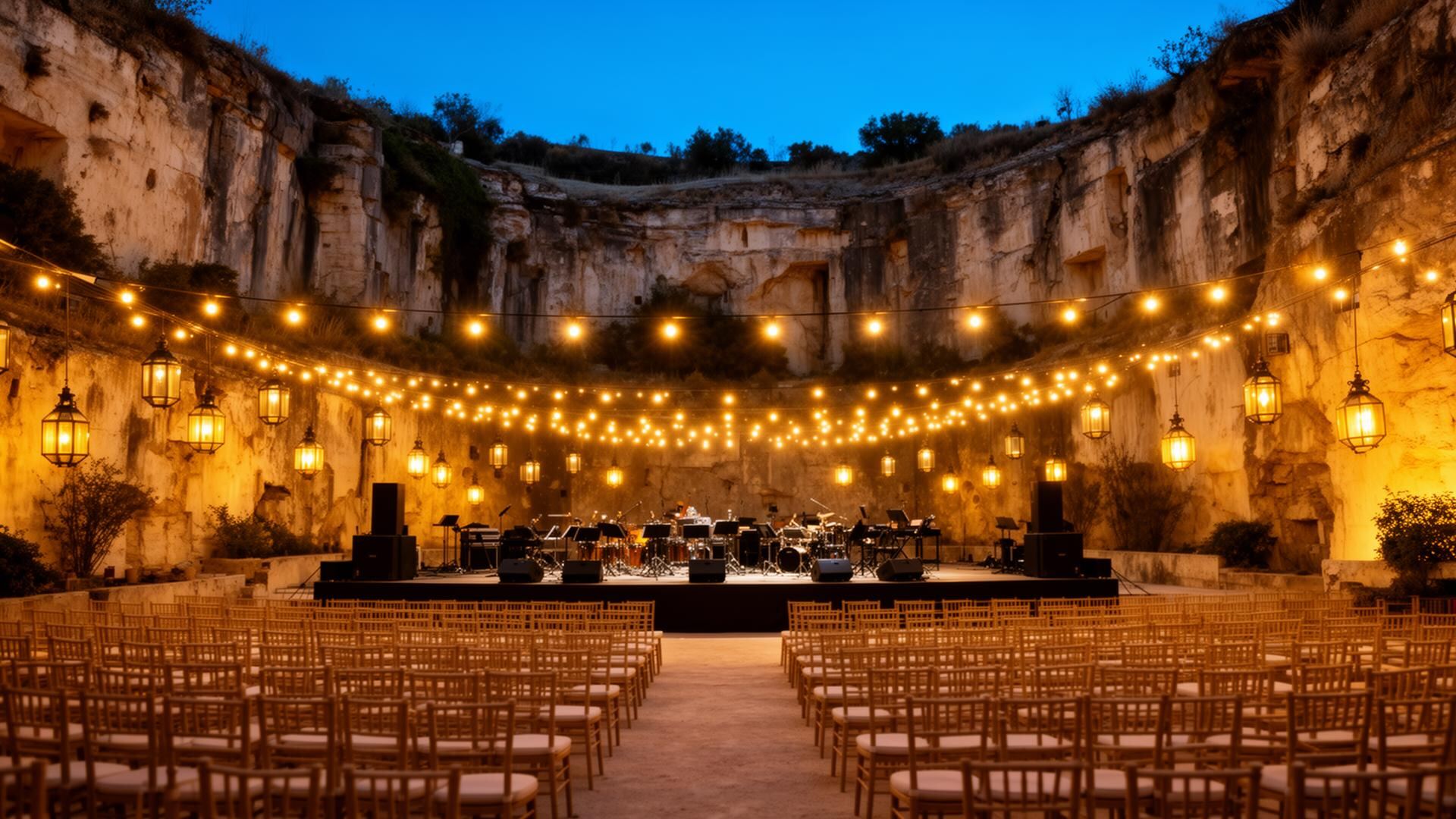
Summer signs off with music: Starlite plays in a former quarry at the foot of the mountains above Marbella from June until the twenty-ninth of August, with the PJ Fest gala following on the third of September.
Why this is the best time to view property
This is the part guidebooks leave out, and it matters to anyone considering a house on this coast.
A property is best judged when its surroundings are being themselves. In August every town on the Costa del Sol looks identical: full, open, busy. It is almost impossible to tell whether a street is quiet, whether the neighbourhood lives year-round, or whether everyday errands can be done within ten minutes once the season ends.
In September and October you see it immediately. You see which centres empty out and which keep going. You see what the airport run actually takes when the motorway is moving. You see what a morning looks like in a specific district, when the children are heading to school rather than the beach.
There is also a simpler factor: after the holidays, everyone comes back to the table. Owners, lawyers, notaries, banks. September is the month on this coast when decisions parked since June finally get made.
Getting here out of season
Málaga's airport serves over one hundred and sixty destinations in more than forty countries, and most northern European hubs are connected year-round rather than seasonally. United flies direct between Newark and Málaga through the season, at just under eight hours; from elsewhere in North America it is one connection through Madrid, London, Paris or Frankfurt.
Outside peak summer, fares drop noticeably and the airport itself takes fifteen minutes to cross rather than an hour. Marbella is forty-five minutes away by road, Estepona about an hour.
If you are thinking of coming
September and October are the best time to see this coast as it is for most of the year, rather than as it appears for six weeks of summer.
At Luumare Estate we arrange these visits individually: we match properties to what you are actually looking for, show you neighbourhoods at different times of day, and tell you plainly what you will find in each. No rush and no pressure — autumn on the Costa del Sol is the season least suited to being hurried.