31 July 2026
Marbella vs. an Exclusive Address in Miami or California: How Do They Really Compare?
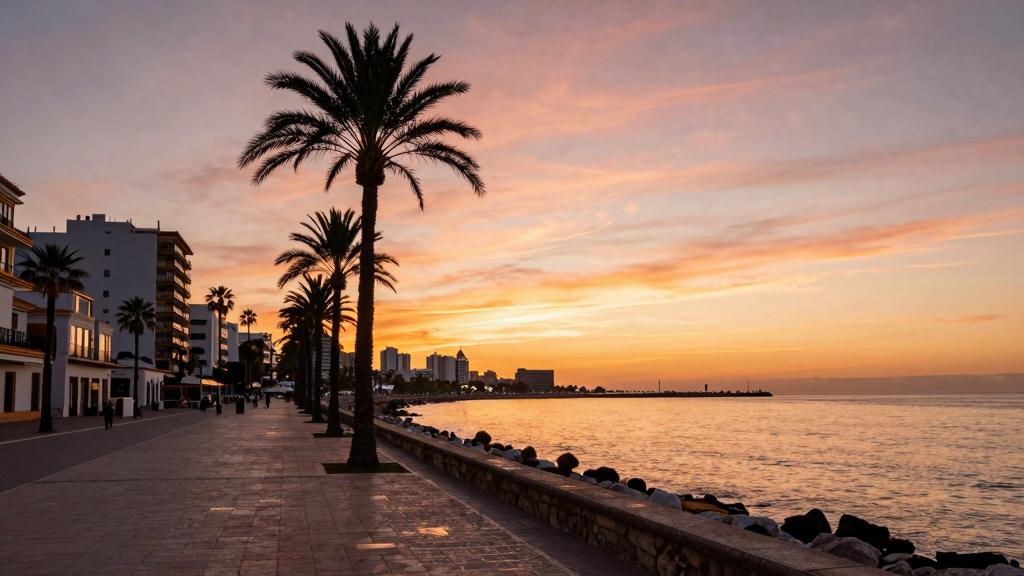
Marbella and a trophy address in Miami or coastal California both deliver sun, luxury, and international cachet — the differences show up in the details. Marbella offers a Mediterranean climate with no hurricane season, a walkable town built around a marina and an old quarter, and historically more space per dollar. Miami and California offer zero cross-border tax complexity and no language adjustment. Which fits depends on what you're optimizing for.
A note before you dive in: immigration and tax rules shift — sometimes quickly. What follows reflects our latest research, but you should always confirm the current specifics with a licensed advisor before acting on them.
If you already own — or have shopped seriously — in Coral Gables, Star Island, Coconut Grove, or on the California side in Malibu, Montecito, or Newport Beach, you don't need us to tell you what an exceptional coastal address looks like. You already know. This isn't an argument for why Marbella is better. It's a category-by-category comparison for buyers who understand exactly what premium coastal real estate costs and delivers, and want an honest read on how Marbella measures up against what they already know.
Climate: Two Excellent Climates, One Real Difference
Southern California's climate is one of the most envied in the country, and for good reason — mild, dry, sunny more days than not. The Costa del Sol works from the same playbook: mild winters, long dry summers, a coastline angled to catch the sun nearly year-round. Stand on a terrace in either place in April and you'd be hard-pressed to say which one has the better weather.
Miami's climate is a different animal entirely — genuinely tropical, noticeably more humid than either Marbella or coastal California, and positioned inside the Atlantic hurricane season, which the National Hurricane Center (nhc.noaa.gov) puts officially at June through November. That's simply the geography; plenty of Miami owners plan around it without much drama. But it is a real, documented seasonal consideration that doesn't exist on the Costa del Sol, which sees no hurricane activity at all.
California carries its own well-documented exposure: wildfire risk in many hillside and canyon communities, and earthquake risk across the region more broadly. So "no hurricanes" isn't a verdict on Marbella being safer overall — every one of these markets asks an owner to understand a particular set of natural-hazard trade-offs, and hurricane season is simply the one that doesn't apply on the Costa del Sol.
Cost and Value Positioning: What a Budget Actually Buys
This is the category that tends to get people leaning forward — and also the one where we want to be careful about precision. We haven't verified specific price-per-square-foot figures for Miami or California trophy addresses, so we're not going to quote any, and we'd treat any number you find floating around online with the same skepticism.
What is widely understood in the ultra-prime market is a general positioning, not a hard statistic. Experienced luxury buyers and agents on both sides of the Atlantic will tell you the same thing, independently: comparable space, land, and finish quality along the Costa del Sol have historically stretched further than an equivalent budget at a trophy address in Miami or coastal California. A well-located villa on the Golden Mile, in Sierra Blanca, or in La Zagaleta — a serious plot, a pool, real sea views — tends to represent more house and more land for the money than the same budget commands on Star Island or in Malibu. That's not a comment on whether Miami or California pricing is fair; scarcity and demand set prices everywhere, and both of those markets earn their premiums. It's simply a pattern worth exploring property by property, not a formula to apply blindly.
If you want to know what this looks like for your specific budget, that's a conversation, not a spreadsheet — values move property by property and neighborhood by neighborhood on both sides of this comparison.
Lifestyle and Culture: Two Different Everyday Rhythms
This might be the most genuine point of difference between the two, and it cuts however you weight it.
Life in Miami and coastal California's most exclusive pockets tends to run on wheels — even in Coconut Grove or Newport Beach, dinner, the marina, and a friend's house are usually a drive away, and that's simply how those places are built: low-density, spread out, designed around the car the way most of coastal America is. Marbella works on a different logic. Its old town, the Casco Antiguo, is centuries old and built for walking — narrow streets, flower-draped balconies, a plaza you can actually sit in. Golf culture runs deep, with more courses within a short drive than almost anywhere else in Europe, and Puerto Banús has drawn an international crowd to its marina for decades. It's a town organized around a plaza, a promenade, and a harbor rather than a freeway — a genuinely different shape of daily life, not a better one.
There's also the community itself. Marbella has drawn wealthy European, British, Scandinavian, and Middle Eastern buyers for more than half a century, and that history shows up in the texture of the place — restaurants, private clubs, schools, and services built up over generations rather than a recent luxury build-out.
None of that is free, and we're not going to pretend otherwise. Choosing Marbella means choosing a different language and a different culture. English gets you a long way — Marbella's real estate offices, restaurants, and established expat corridors run comfortably in English day to day. But real immersion — navigating local bureaucracy, building a social circle outside the expat bubble, feeling properly at home — takes real cultural adjustment, in a way a Miami or California purchase simply doesn't ask of you. Some buyers want exactly that: a genuine change, not just a change of address. Others would rather skip it, and that's a completely fair position too.
Connectivity and Travel: The Honest Trade-Off
Let's be precise here rather than optimistic. There's no direct flight from Málaga to Miami, and none to any California airport either. If frequent trips to those specific US markets are part of the plan, you're connecting through somewhere else either way — that's simply the geography of it.
What Málaga does offer is a direct United Airlines route to New York/Newark: roughly seven flights a week, about 7 hours 45 minutes in the air (as of July 2026) (source: united.com) — a real, current connection, and shorter than most people expect before they actually check. Beyond that one US route, Málaga's airport is built around Europe — London, Paris, Frankfurt, Amsterdam, and the other major hubs are two to three hours away, which puts most European capitals within easy weekend reach. For a buyer who travels often within Europe, or simply likes having London or Geneva a short hop away, that's a genuine plus a Miami or California base can't replicate. For a buyer whose travel is almost entirely US-domestic or West Coast-centric, it cuts the other way — a real trade-off worth weighing honestly, not a wash.
Tax and Ownership Complexity: Different, Not Simply Better or Worse
We won't gloss over this one. Owning in Miami or California, for a US citizen, means zero cross-border complexity — one tax system, one set of familiar rules, one country's worth of paperwork. That simplicity is real, and it's worth naming plainly rather than minimizing.
Owning in Marbella adds a second layer. As a non-resident foreign owner in Spain, you'll deal with Spanish property transfer tax at purchase and an annual non-resident property tax that applies even when the home sits empty, on top of local municipal tax (source: Agencia Tributaria) — and none of that replaces your existing US filing obligations. US citizens report worldwide income and foreign accounts to the IRS no matter where they live (source: IRS), and a Spanish property purchase can trigger additional US reporting depending on how it's structured and financed. The US-Spain tax treaty prevents the same income from being taxed twice, but it doesn't erase either country's paperwork.
Different, genuinely — not worse. Thousands of Americans manage this comfortably every year with the right cross-border CPA and local guidance; it's a well-trodden path, not a novel one. It does deserve honest planning rather than being waved off as a footnote, though, and we go into the specifics of Spanish property tax and the US-Spain tax treaty in dedicated posts elsewhere in this series — worth reading both before you get too far into the process.
Investment and Rental Angle
The Costa del Sol's rental and resale market runs on decades of established international and European tourism — demand that isn't riding on any single nationality of visitor and has held up across more than one economic cycle. We're deliberately not quoting a rental yield percentage here; figures swing too much by property type, location within the Costa del Sol, and season for any single number to mean much. What's fair to say is that the underlying driver — a long-running European tourism and second-home market — is structural, not a recent trend.
Comparison at a Glance
| Category | Marbella / Costa del Sol | Miami / Coastal California | |---|---|---| | Climate | Mediterranean, no hurricane season | Miami: tropical, hurricane season June–Nov. California: dry, with wildfire/earthquake exposure | | Value positioning | Historically more space/luxury per dollar at the prime level (directional, not a fixed figure) | Established trophy pricing; scarcity-driven, no verified comparison figure available | | Lifestyle | Walkable old town, golf and marina culture, decades-old international community | Driving-oriented luxury living; no language or culture adjustment required | | Direct US flight from home base | Direct Málaga–New York/Newark on United, ~7h45m, ~7x weekly (as of July 2026); no direct route to Miami or California | Domestic US flights, no cross-border travel required | | European access | Most European capitals within 2-3 hours | Not applicable | | Tax/ownership complexity | Spanish non-resident tax obligations plus existing US filing requirements | Zero cross-border complexity for a US citizen | | Language/culture | Real adjustment involved; English widely spoken in established expat areas | None required | | Rental/investment demand | Long-standing international/European tourism demand | Established US domestic and international demand |
Where This Leaves You
We're not going to tell you Marbella is simply "better" than Miami or California — that's not an honest claim, and it's not what this comparison is for. What we can say plainly: for a buyer drawn to a genuinely European lifestyle, an established international community, a walkable town built around a plaza and a marina rather than a freeway, and a Mediterranean climate with no hurricane season — and willing to take on some real cross-border tax and language complexity in exchange — Marbella can be a compelling alternative to, or a complement alongside, a trophy address in Miami or California. For a buyer whose priority is zero added complexity and no language adjustment, that trade-off may not be worth it. That's a completely reasonable conclusion too, and either buyer is making a smart call for their own situation.
Luumare Estate is a boutique agency built specifically around serving international and American clients on the Costa del Sol, and a good part of what we do is exactly this kind of comparison — helping a buyer who already knows Miami, Newport Beach, or Montecito understand, property by property, what a given budget actually buys in Marbella versus what they're used to at home. Our personalized property search and investment advisory services exist for exactly this conversation — see our services.
Curious what your Miami or California budget actually translates to in Marbella? Browse our current villas and apartments, explore Marbella in more depth or the wider Costa del Sol, and reach out for a direct, no-pressure conversation about how the comparison looks for your specific situation.



Frequently asked questions
Is property in Marbella cheaper than in Miami or California?
There's no single verified price-per-square-foot figure comparing Marbella to Miami or California, so be skeptical of anyone who quotes you one. What experienced buyers and agents on both sides of the Atlantic will tell you, consistently, is a general pattern: comparable space, finishes, and land in Marbella have historically stretched further than the same budget commands at a trophy address in Miami or coastal California. It's a qualitative pattern, not a fixed discount — worth exploring property by property.
Does Marbella have hurricanes like Florida?
No. The Costa del Sol has a Mediterranean climate and no hurricane season at all. Florida sits squarely in the Atlantic hurricane belt, which officially runs June through November, per the National Hurricane Center (nhc.noaa.gov). Southern California escapes hurricanes too, but it carries its own well-known exposure — wildfire risk in hillside and canyon communities, and seismic risk more broadly.
Can I fly direct from Marbella to Miami or California?
Not yet. There's no direct flight from Málaga to Miami or to any California airport. There is a direct United Airlines route between Málaga and New York/Newark, though — about seven flights a week, roughly 7 hours 45 minutes in the air (as of July 2026) — a real option for buyers who split time between the US East Coast and the Costa del Sol.
Is buying property in Marbella more complicated for an American than buying in Miami or California?
Different, not harder. A Miami or California purchase involves zero cross-border complexity for a US citizen — one country, one tax system. Buying in Marbella means layering in Spanish property tax, non-resident filing obligations, and the usual US reporting requirements — FBAR, FATCA — that follow an American owner anywhere in the world. It's a well-trodden path with the right advisors, but it deserves real planning, which we cover in detail elsewhere in this series.
Do I need to speak Spanish to buy and own property in Marbella?
Not to complete a purchase. Marbella's international real estate market, its legal community, and its service providers operate comfortably in English every day. Daily life is a separate question — leaning into the language and the culture is part of the draw for some buyers and a real adjustment for others. A Miami or California purchase simply doesn't ask that of you.
Related guides
Sources
- United Airlines
- National Hurricane Center / NOAA
- IRS
- Agencia Tributaria